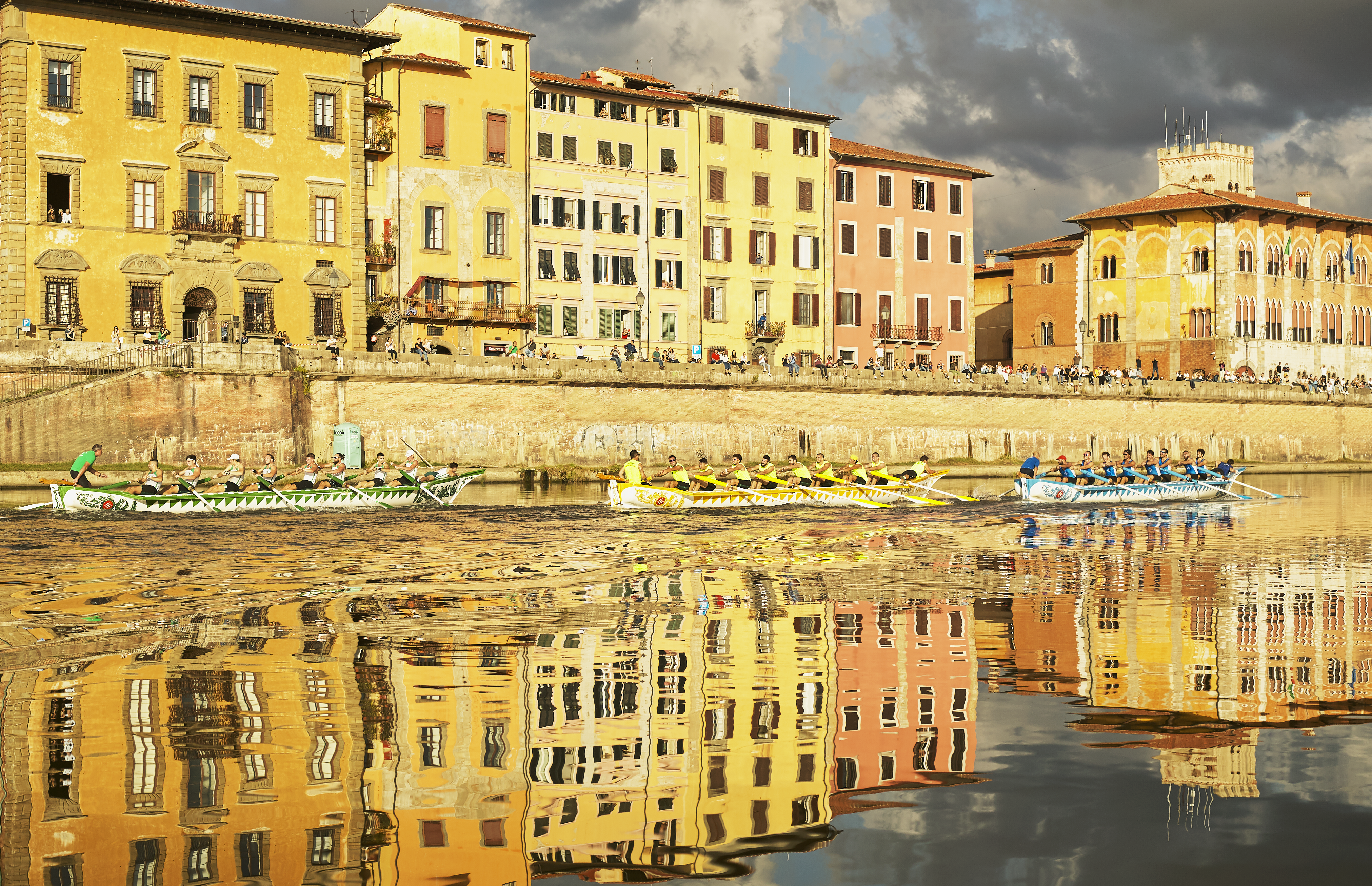
Palio San Ranieri, Pisa - Credit: Silvio Repetto
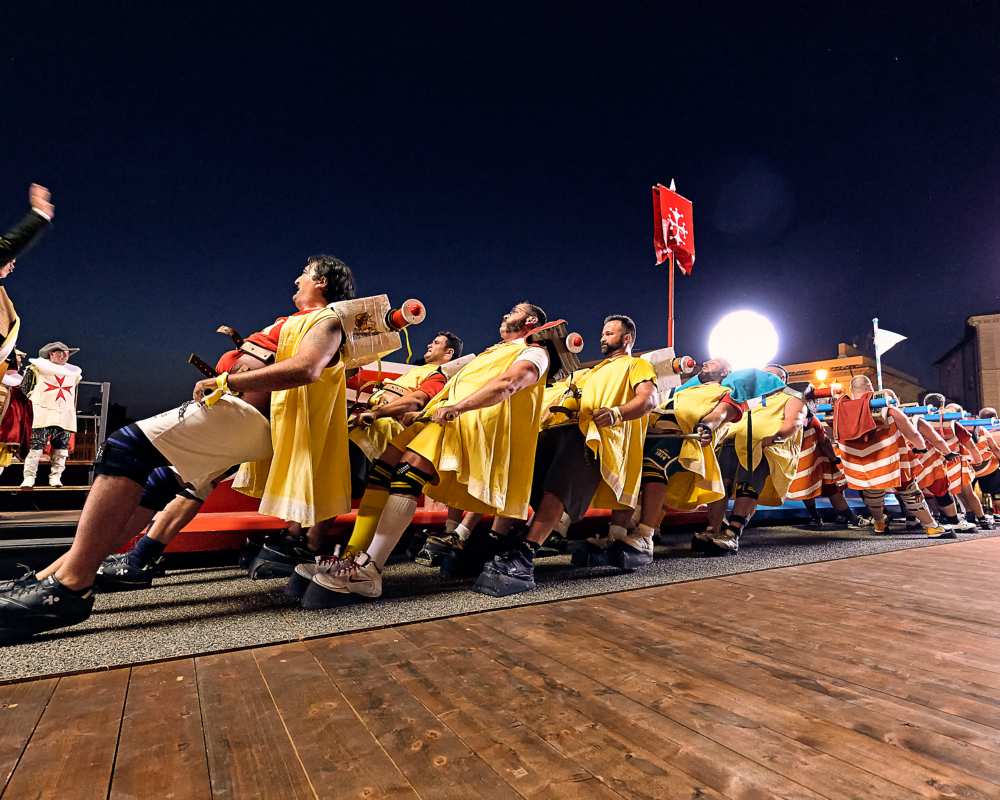
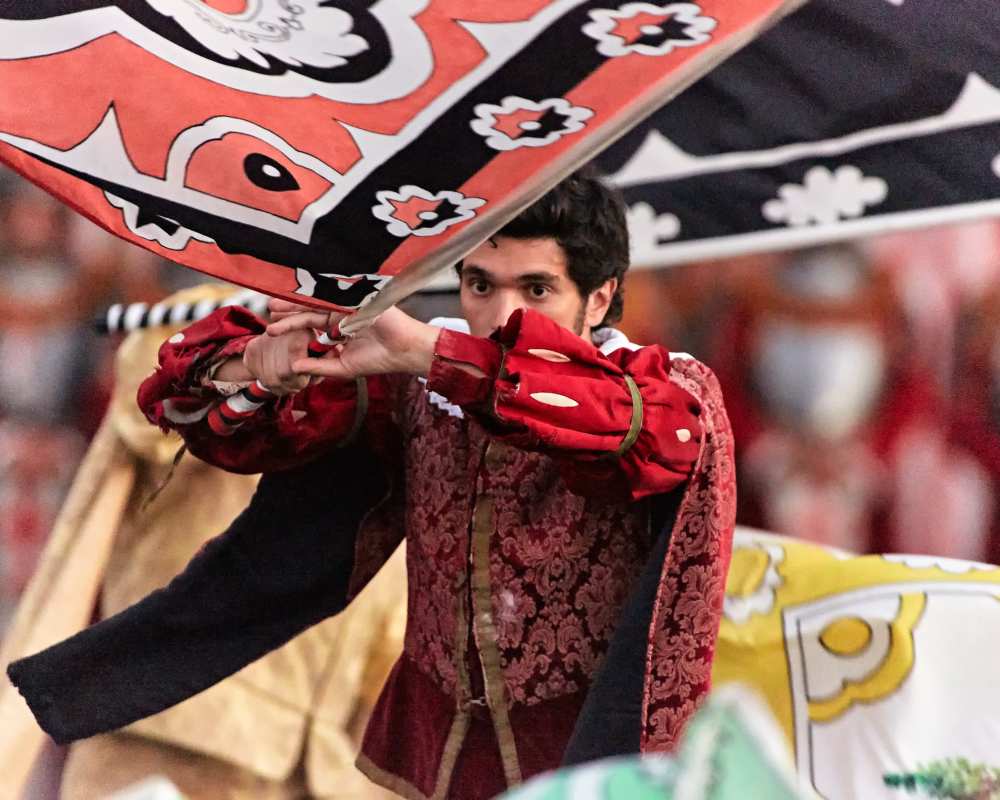
On the evening of the 17 June, Pisa celebrates her patron saint, San Ranieri. The city’s four historic quarters compete in a boat race over the waters of the Arno, a nod to the traditions of the maritime Pisan Republic.
The origins of the Palio of San Ranieri date back to the Medieval period, when other, similar competitions took place in Pisa to mark the Feast of the Assumption. After Pisa was conquered by Florence, the race stopped for several hundred years, only being resurrected in 1635. It was not until 1718, however, that the Palio was dedicated to San Ranieri rather than to the Assumed Virgin Mary, as it had been originally.
The boats, each crewed by eight rowers, a helmsman and a cox, race alongside each other for 1500 metres, from the Ponte della Ferrovia to the Palazzo Mediceo, before reaching an anchored boat, which marks the finish line. At this point the cox has to climb a flagpole ten metres high and squeeze the blue “paliotto”, the sign of victory. Two others, white and red respectively, are there to recognise second and third place. The crew coming last, meanwhile, derisively receive a paper cup for their pains.
The end of the Palio di San Ranieri alludes to the battle of Lepanto, when the fleet of the Knights of the Order of Santo Stefano boarded the Turkish flagship and hoisted their flag, which is today kept in Pisa’s Chiesa dei Cavalieri (church of the knights).
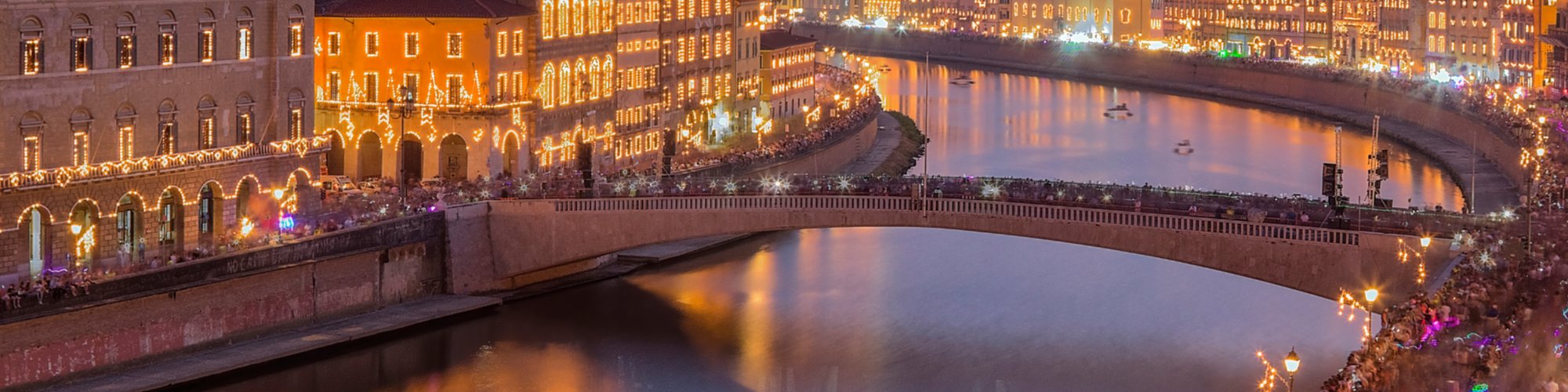
The Palio is preceded on June 16, at dusk, by the magical Luminara di San Ranieri.