Versione Italiana English Version
Regione Toscana
Carnevale di Viareggio 2007
Burlamacco Maschera ufficiale del Carnevale di Viareggio
Burlamacco al Carnevale

Talk to Tuscany
Visit Tuscany

Blog


The history of the Carnival of Viareggio

The history of the Carnival of Viareggio

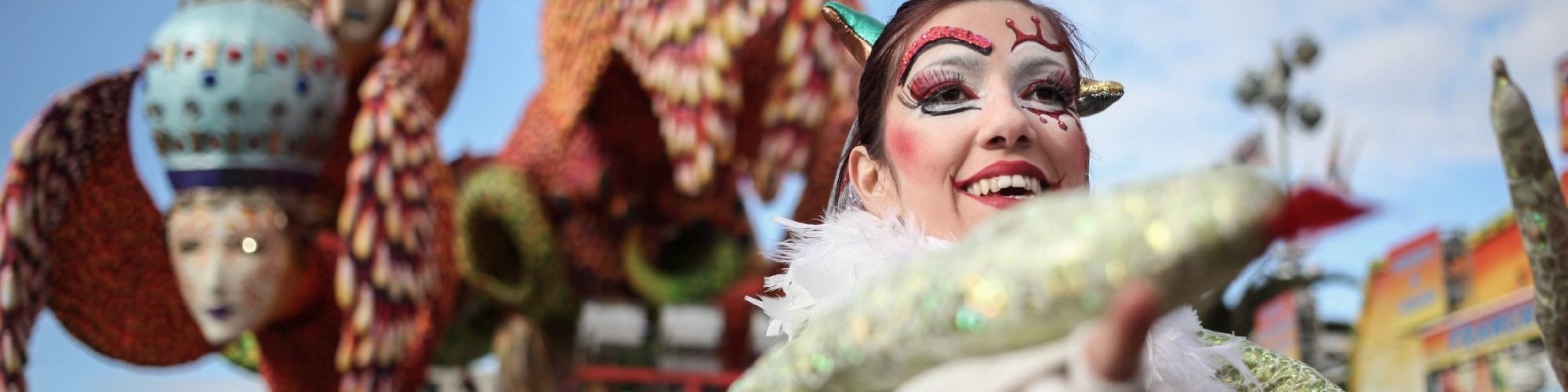
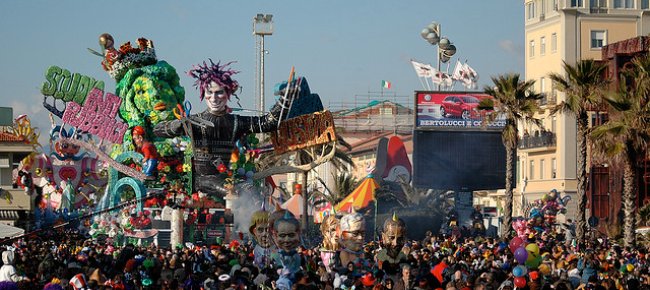
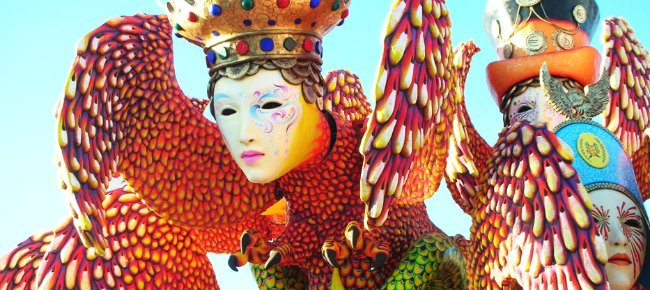
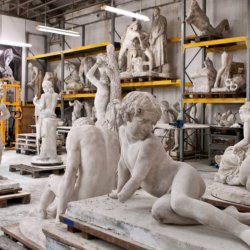
In February 1873, around the coffee tables of the Casino, the idea of an open air parade of floats to celebrate the carnival, blossomed among the young well-to-do of Viareggio. On Mardì Gras 1873, the Viareggio Carnival, one of the finest and grandest in the world, was born. By the end of the nineteenth century this festival for the people was already hugely successful. The parade was made up of monumental triumphal floats built of wood, plaster and jute and modelled by sculptors, carpenters and ironmongers. These artisans were more used to building ships from the ladders of the naval dockyards, ships that went on to survive rough seas and harsh winds. From then on, the floats built each year have navigated through a sea of amazed and delighted people.
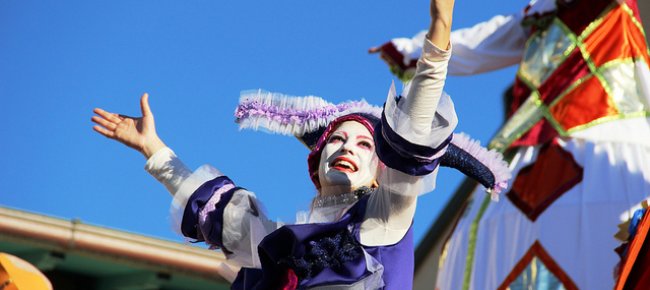
The First World War threatened to sweep away the belle époque in Europe and the Viareggio Carnival with it, although it managed instead to flourish and become even more splendid and more grandiose. After an interval of some years, the floats were back in 1921 when they paraded along Viareggio’s two main avenues, running parallel to each other and the seafront. These avenues and the well-known seafront promenade with their backdrop of the Apuane Alps, were and are today a place of incomparable beauty. In 1921, the official carnival song, the “Cup of Champagne” was first sung and to this day it remains the carnival anthem. Huge puppets were made to move to the sound of music for the first time, dancing to a band on board a float called “Tonin di Burio”, which showed a wedding feast in the yard of a farmhouse. Two years later “Pierrot”, the nostalgic and romantic figure of the Carnival, was the first carnival figure to move head and eyes.
 
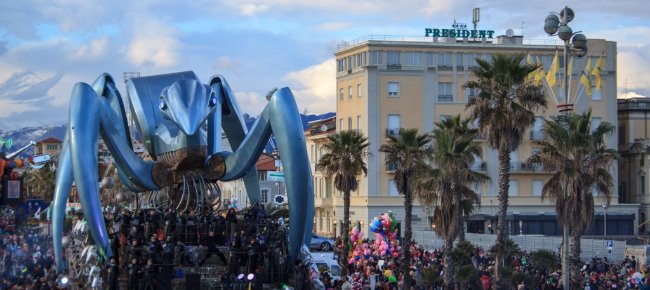
In 1925, through the initiative of some builders, papier-mâché was introduced to create the floats and from then on has allowed colossal but very light constructions to be used. These enormous figures that seem to hover in the air and challenge the laws of gravity. With this new technique, you could say that the history of the Viareggio Carnival turned into legend, thanks to the constructors who, because of their creative capacity, were called “papier-mâché wizards” by the national and international press. In 1930, Uberto Bonetti, the painter, who had illustrated the magic of the carnival with official posters, created Burlamacco. In1931, this character appeared in the company of Ondina against a background of piers projecting into the sea. Today, Burlamacco has a place among the Italian carnival figures in Rome at the Folklore and Tradition museum and is on exhibit in Paris at the Musée de l’Homme.

After the Second World War, the carnival restarted in 1946 and since then has gone from strength to strength. The only set back was in 1960 when a frightening fire spread through the hangars where floats are made. Since the first TV programmes were broadcast in 1954, the Viareggio Carnival has been watched by hundreds and thousands of viewers. As always, each year, a long line-up of well-known guests, politicians, sportsmen and show business personalities have come to Viareggio to admire their effigies in papier-mâché. The Viareggio Carnival celebrated its 125th year in 1998 with an incredible entire month of 24 hour celebrations. Now, strengthened by its continued success, the future of the Carnival is bright. Spectacular floats, parades, parties in all the districts and masked balls are planned as well as the youth football tournament the “Carnival Cup”.

Since 2002 the Viareggio Carnival has been named Italian and European Carnival. Every year during a four week period, day and night time celebrations take place. 2001 was a memorable year in the history of the Viareggio Carnival: a new city within the city, the Carnival Town, was inaugurated. This multi-functioning area includes new hangars for making floats, a papier-mâché school and a great arena where, during the summer, “Citadel under the stars”, a series of shows, concerts and cultural initiatives take place. There will soon also be an interactive Carnival museum that will tell the story of the Viareggio Carnival.

Viareggio Carnival brings together different cultures, ideas and people. Thanks to the media coverage, this local event takes on a global slant and is able to combine tradition with the universal principals of solidarity and peace. Every year thousands of people descend on Viareggio to take part. Come and join us!

Source: www.viareggio.ilcarnevale.com

(Fonte: Versilia Tourist Information Office)


Vedi anche


COMMENTS

Leave your comment below


Scrivi un commento


Nome:

Email:

Commento:


Connect
Viareggio

Luoghi nei dintorni

Indirizzo


Contatti