The National Park of the Tusco-Emilian Apennines extends lengthwise for about 60km from the high valleys of the mountain torrents of Parma and Baganza up to the Passo delle Forbici, opening up to include on the Tuscan side the calcareous massif of the Pania di Corfino, and in Emilia the chain of the Alps of Succiso, of Monte Cusna, the valley of the river Secchia and the isolated range of the Pietra di Bismantova. On the Tuscan side, the park continues with the Natural State Reserves of Orecchiella Park that constitutes a protected area of enormous naturalistic interest.
The national park itself does not yet have its own Visiting Centres; for the area in Tuscany it is advisable to refer to the Visiting Centre of the Parco dell’Orecchiella which provides an excellent starting-point for excursions in the southern part of the territory. Further north, the “I Frignoli” Centre for Biodiversities in Sassalbo is recommended, which as well as furnishing a comprehensive panorama of the flora in the park, also offers a naturalistic itinerary specifically regarding glacial morphology.
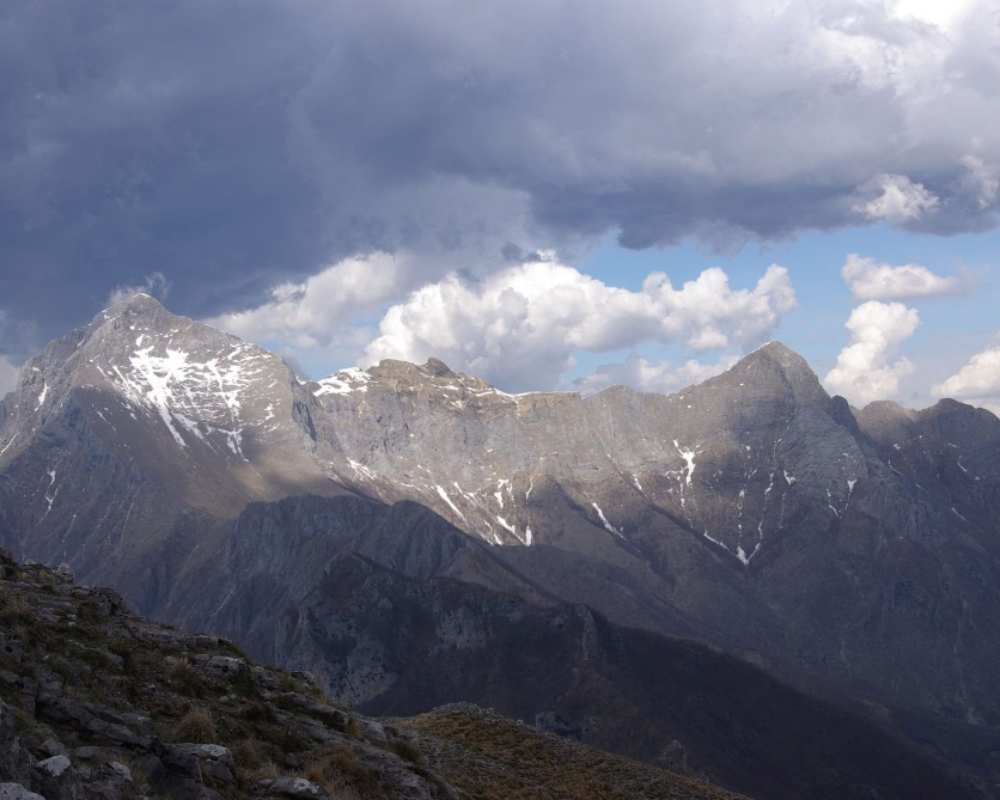
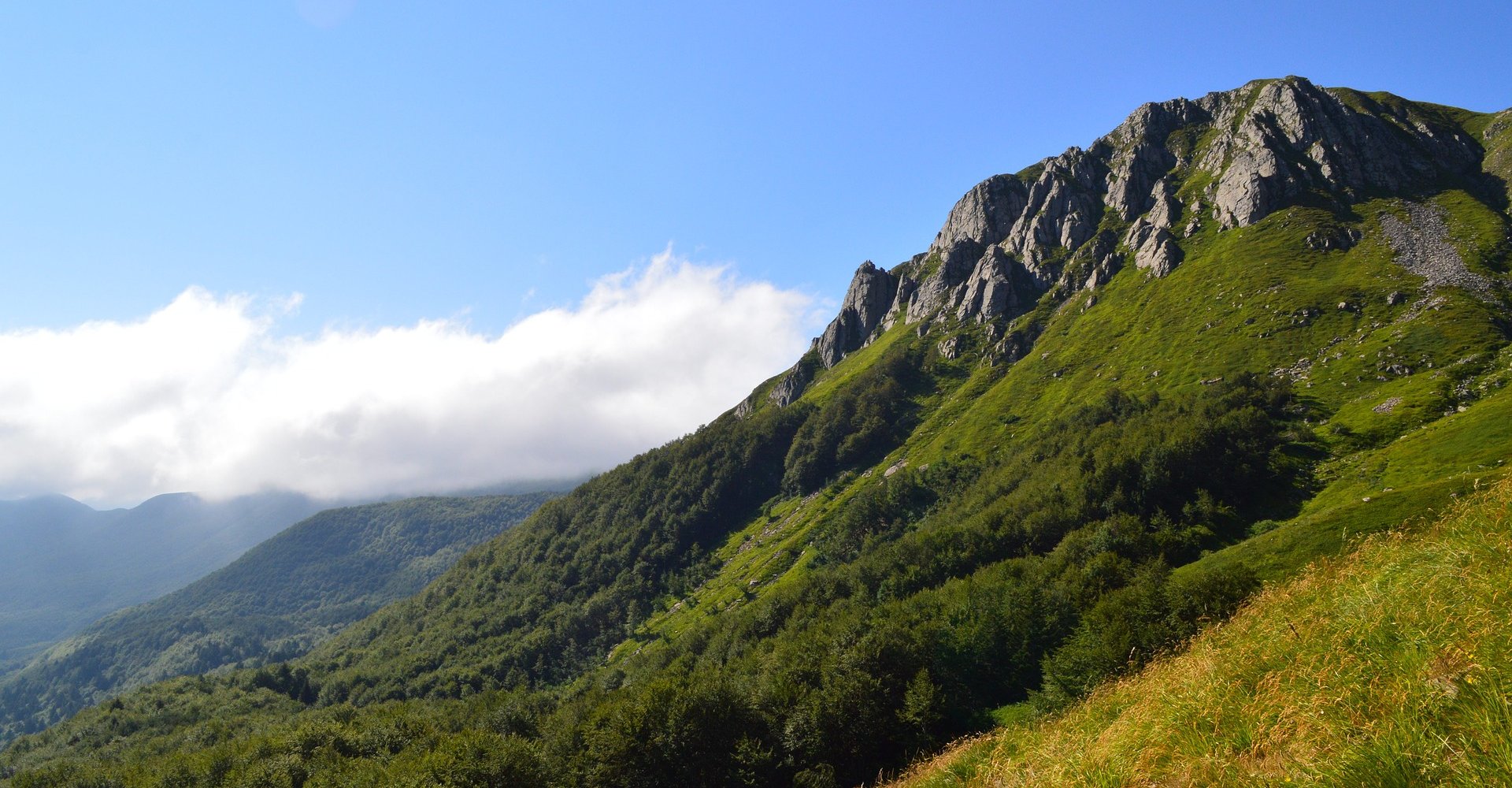
The park boasts some of the highest peaks of the northern Apennine range, such as the Alps of Succiso, the Monte Prado and the Cusna, all more than 2,000 metres above sea level. The Monte Prado, at 2,054 metres is the highest peak in the county. The sandstone Macigno dominates the entire crest where it has given rise to undulating spurs and blunt peaks, contrasting with the sharp, windswept mountain tops of the nearby Apuan Alps. In some points the sandstones form rocky outcrops in which the strata of the rock can be recognised, for example the ‘Scaloni’ in ‘Bocca di Scala’ and the ‘Schiocchi’ on the Emilian side.
The position of this tract of the Apennine range, sheltered by the Apuan Alps from the gentle Tyrrhenic currents and exposed to the cold continental winds on the Emilian side, creates rather particular climactic conditions similar to those in the Alps of the north, influencing the flora and fauna in the higher areas. The Pania di Corfino, an imposing calcareous range, in part included in the State Reserve of the same name, is clearly distinguishable for its forms caused by erosion, and the flora and fauna similar to those found in the Apuan Alps.
The forests
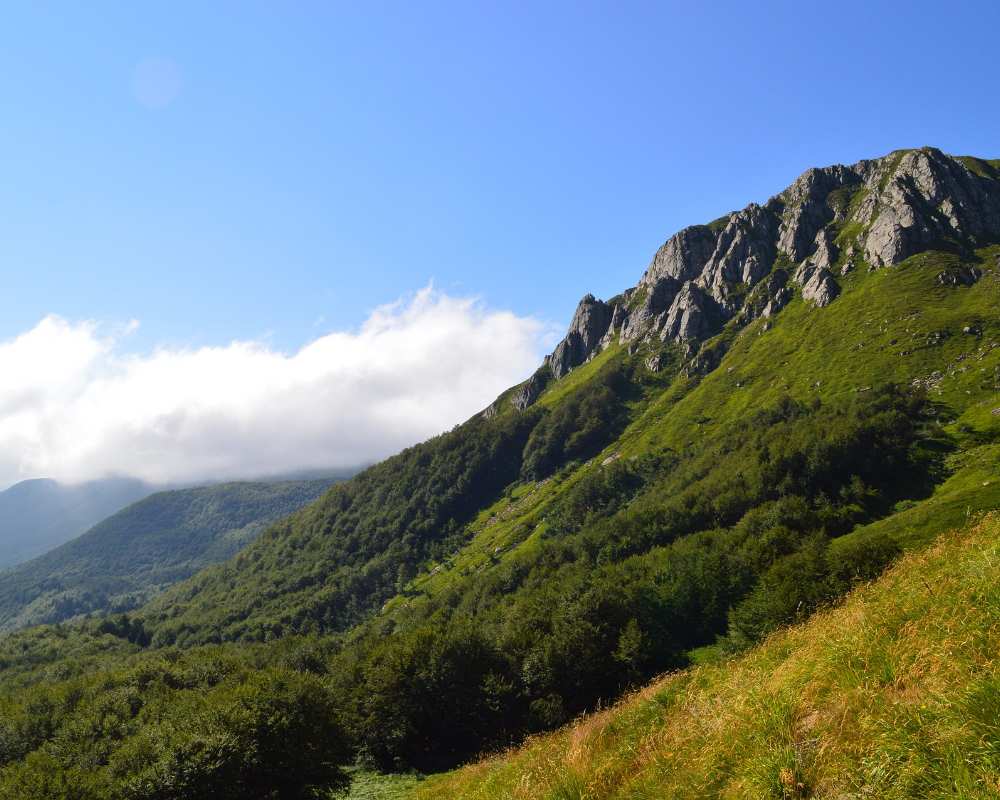
The forest surrounds the Apennine ridge up to a height of about 1,700 metres where heaths and grassland take over. At levels up to 1,000 metres, Turkey oak woods predominate, many of which have been transformed in chestnut woods, in part still cultivated today. Above 1,000 metres the beech prevails, in some areas mingled with the silver fir. The ’rana temporaria’ inhabits the streams of these forests, an amphibian distributed prevalently in the Alps but also in some Apennine areas, considered to be a ‘glacial relict’.
The forests of the park have been intensely exploited over the past centuries, both for wood and pasturing, leading to deforestation in many parts in order to expand areas for pasture and cultivation. Traces of this can still be seen all over the park where the shrub and undergrowth have taken over those areas once used for agricultural and pasturing purposes and later abandoned. The area's still cultivated and used for pasture and the shrub are both inhabited by some of the few pairs of yellowhammers still nesting in Tuscany, along with other rare birds such as the stonechat and the rock bunting.
The oak and beech forests are populated with wild boar, roe and red deer which come to the grassy clearings and shrubby areas to feed, moving higher up the mountain in the warmer months. The conifer woods, mostly of silver and red firs, alternate with the beech woods. These were planted at the beginning of the last century in order to recover the slopes devastated by pasturing and excessive exploitation of the woodland that had left much of the terrain bare. Some of the older reforestation plans still exist, such as the ‘Abetina reale’, a silver fir wood at the foot of the Monte Prado, used for centuries by the Estensi family who were landowners of much of this area.
The national park itself does not yet have its own Visiting Centres; for the area in Tuscany it is advisable to refer to the Visiting Centre of the Parco dell’Orecchiella which provides an excellent starting-point for excursions in the southern part of the territory. Further north, the “I Frignoli” Centre for Biodiversities in Sassalbo is recommended, which as well as furnishing a comprehensive panorama of the flora in the park, also offers a naturalistic itinerary specifically regarding glacial morphology.
The park boasts some of the highest peaks of the northern Apennine range, such as the Alps of Succiso, the Monte Prado and the Cusna, all more than 2,000 metres above sea level. The Monte Prado, at 2,054 metres is the highest peak in the county. The sandstone Macigno dominates the entire crest where it has given rise to undulating spurs and blunt peaks, contrasting with the sharp, windswept mountain tops of the nearby Apuan Alps. In some points the sandstones form rocky outcrops in which the strata of the rock can be recognised, for example the ‘Scaloni’ in ‘Bocca di Scala’ and the ‘Schiocchi’ on the Emilian side.
The position of this tract of the Apennine range, sheltered by the Apuan Alps from the gentle Tyrrhenic currents and exposed to the cold continental winds on the Emilian side, creates rather particular climactic conditions similar to those in the Alps of the north, influencing the flora and fauna in the higher areas. The Pania di Corfino, an imposing calcareous range, in part included in the State Reserve of the same name, is clearly distinguishable for its forms caused by erosion, and the flora and fauna similar to those found in the Apuan Alps.
The forests
The forest surrounds the Apennine ridge up to a height of about 1,700 metres where heaths and grassland take over. At levels up to 1,000 metres, Turkey oak woods predominate, many of which have been transformed in chestnut woods, in part still cultivated today. Above 1,000 metres the beech prevails, in some areas mingled with the silver fir. The ’rana temporaria’ inhabits the streams of these forests, an amphibian distributed prevalently in the Alps but also in some Apennine areas, considered to be a ‘glacial relict’.
The forests of the park have been intensely exploited over the past centuries, both for wood and pasturing, leading to deforestation in many parts in order to expand areas for pasture and cultivation. Traces of this can still be seen all over the park where the shrub and undergrowth have taken over those areas once used for agricultural and pasturing purposes and later abandoned. The area's still cultivated and used for pasture and the shrub are both inhabited by some of the few pairs of yellowhammers still nesting in Tuscany, along with other rare birds such as the stonechat and the rock bunting.
The oak and beech forests are populated with wild boar, roe and red deer which come to the grassy clearings and shrubby areas to feed, moving higher up the mountain in the warmer months. The conifer woods, mostly of silver and red firs, alternate with the beech woods. These were planted at the beginning of the last century in order to recover the slopes devastated by pasturing and excessive exploitation of the woodland that had left much of the terrain bare. Some of the older reforestation plans still exist, such as the ‘Abetina reale’, a silver fir wood at the foot of the Monte Prado, used for centuries by the Estensi family who were landowners of much of this area.

Where to eat