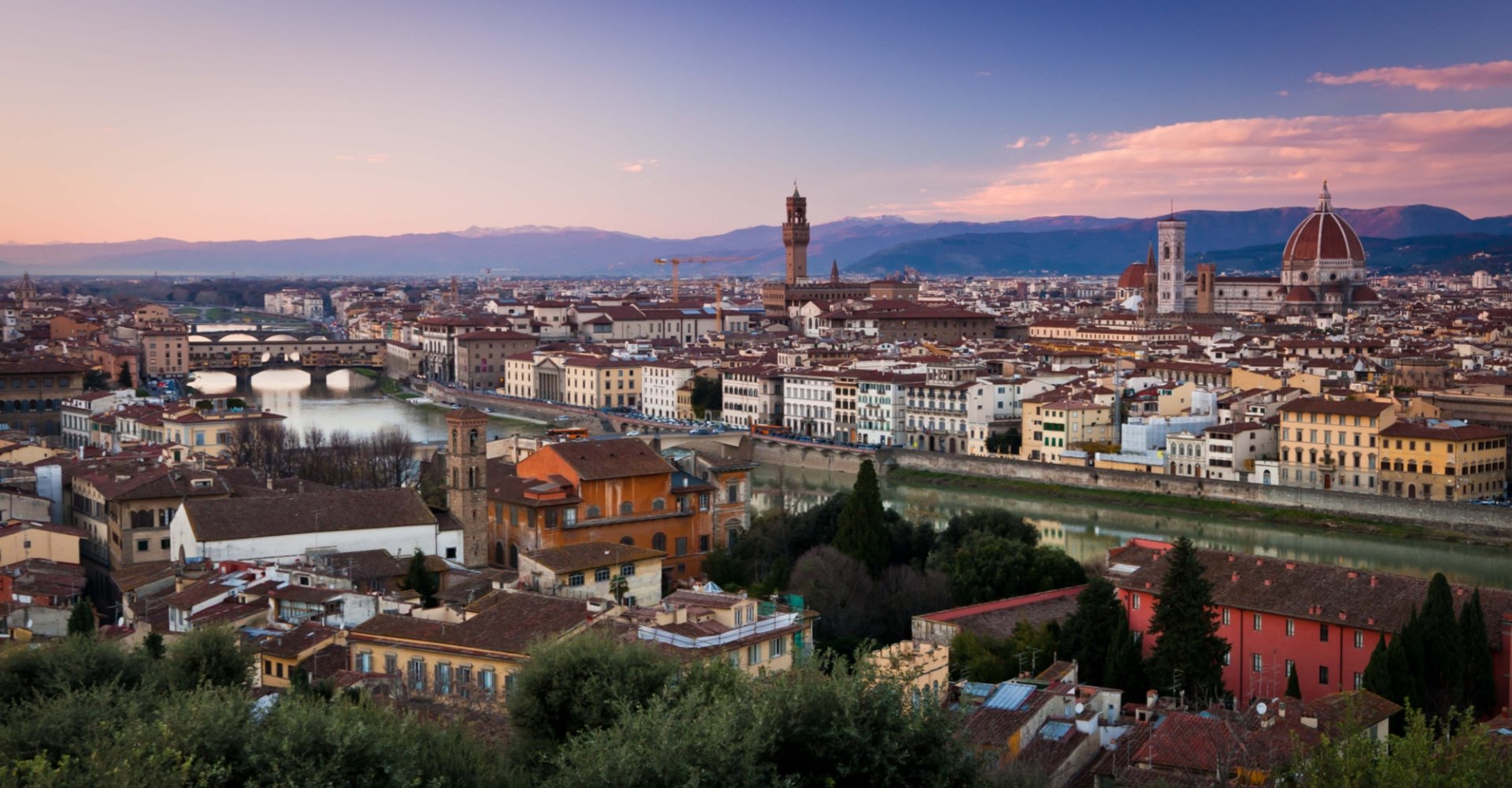
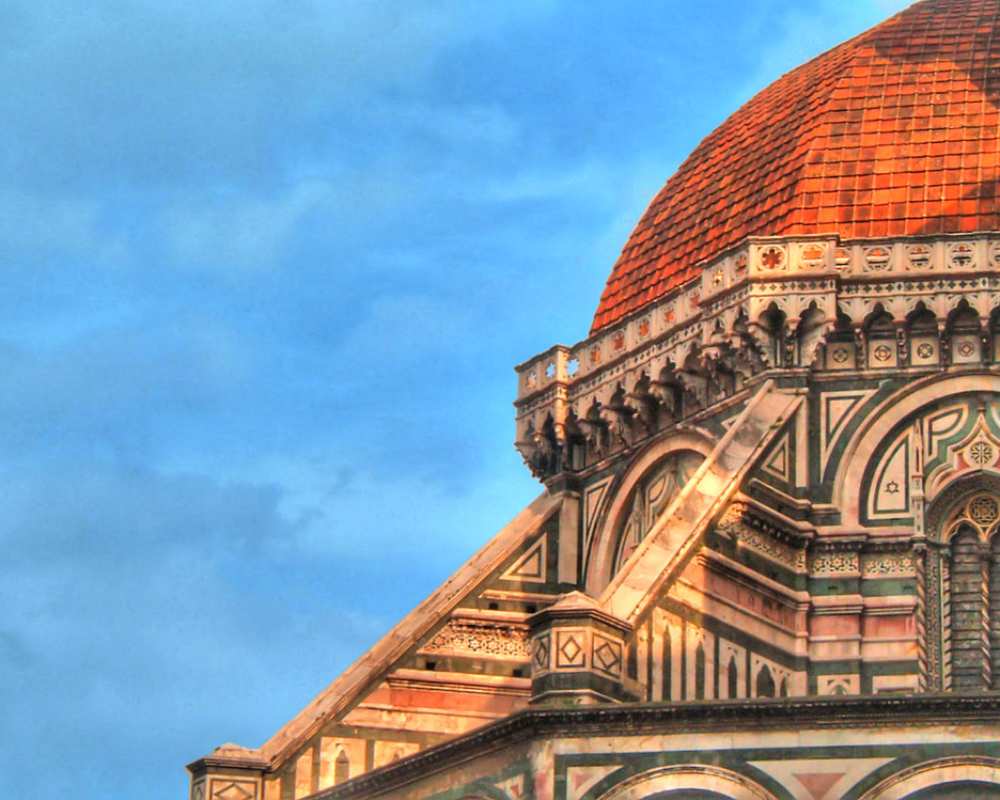
Basilica di Santa Maria del Fiore
The entrance to the Cathedral is free. On the contrary, if you want to climb up on the top of the Cupola or the adjacent bell tower built by Giotto there's a ticket to buy. You can even take a unique ticket to visit, in 48 hours, all the monuments of the complex.
Orsanmichele
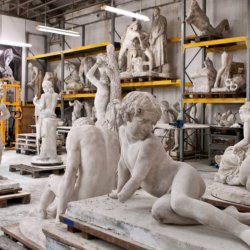
This beautiful church, a few steps away from the Cathedral, was originally a market, with a loggia at ground level and a granary above. The loggia was bricked up in 1367-1380 and Orsamichele became the church of the crafts and trade guilds, which embellished the outer walls with statues of their patron saints. On the first floor, there is a museum with some of the original sculptures, which are considered to be milestones of Renaissance sculpture (Via dell'Arte della Lana, 3)
Santa Trinita
The Holy Trinity church was built in the late 11th century, enlarged in the 14th, and altered quite a bit in the 17th century; it retains traces of the 14th-century decoration and some great works of art, including frescoes by Domenico Ghirlandaio that show views of Florence and portraits of historical figures. The 16th-century façade is by Buontalenti, but the counter-façade is still part of the original one, built in the 11th century (Piazza Santa Trinita, Florence)
San Miniato al Monte
A 11th- to 13th-century church in the Romanesque style (one of the oldest in Florence) that dominates the southern hill of the city. The interior has a mosaic from the 12th century and a raised presbytery over a crypt, decorated with frescoes by Taddeo Gaddi; the nave has a patterned floor (1207) and leads up to a freestanding chapel by Michelozzo (1448). Next to the church is a beautiful, old cemetery, with grand Neo-Gothic and Neo-Renaissance tombs. Walk up to the church early in the morning for a good dose of fresh, cool air and enjoy the view (Via delle Porte Sante, 34, 50125 Firenze)
Santa Felicita
Between Ponte Vecchio and Piazza Pitti, located in a small square to the left (so small you might miss it!) is this tiny Renaissance church with a chapel (to the right of the entrance) that has two important masterpieces by Pontormo: the Deposition and the Annunciation. The chapel was used by the Lorraine Grand Dukes, who would attend Mass from the Vasari Corridor!
Santissima Annunziata
Piazza Santissima Annunziata A very “Florentine” church still used for society weddings. It was founded in 1250 and enlarged several times (the portico was added in 1601). The entrance is through the Chiostrino dei Voti (Little Cloister of the Vows), which has fine frescoes by Pontormo, Andrea del Sarto and others. Another cloister is known as the Chiostri dei Morti (The Cloiser of the Dead) and contains a famous Madonna del Sacco by del Sarto. The Baroque interior has a small temple on the left, which houses an image believed to be miraculous – the Annunciation by an unknown 14th-century artist - because, according to legend, the face of the Virgin was painted by an angel.
Santo Spirito
Piazza Santo Spirito, 30 It’s often closed but if you happen to find it open … go inside! The Church of the Holy Spirit, begun by Brunelleschi in1444 and completed by others, is one of the purest examples of Renaissance architecture.
Ognissanti
Borgo Ognissanti, 42 This Baroque church located in a large piazza that looks onto the Arno river has two detached frescoes (taken off the wall for restoration but put back in their original location) by Ghirlandaio and Botticelli (the latter of which was buried there). The church was altered significantly in the 17th-18th centuries; only the bell tower survives from the 13th-century.